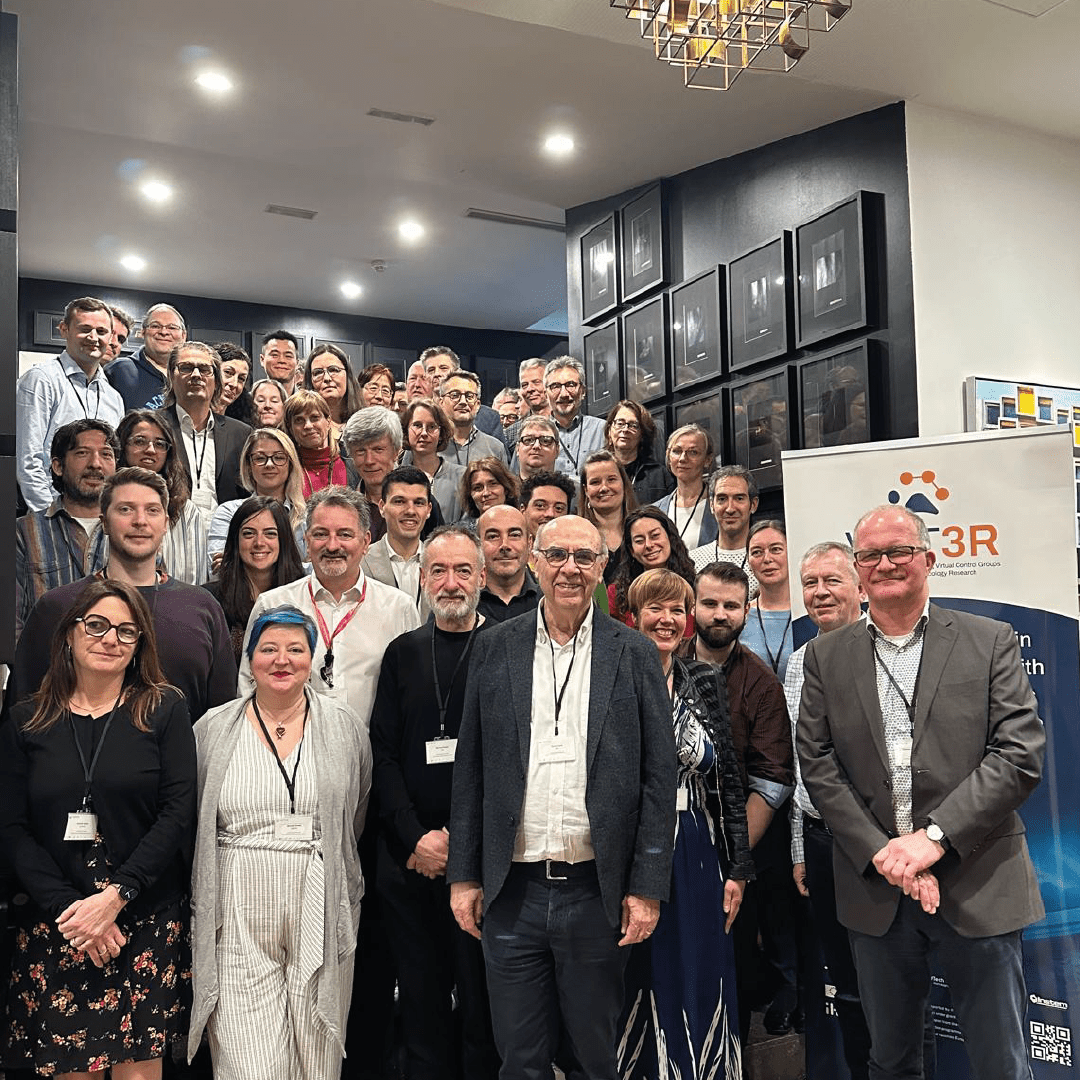
On 26 May 2026, VICT3R was featured in the European Chemicals Agency (ECHA) Science seminar: Virtual control groups in pre-clinical toxicity studies.
During the session, Thomas Steger-Hartmann (Bayer) and Claus Stie Kallesøe (grit42) presented the latest developments from the VICT3R project, including a practical demonstration of how Virtual Control Groups (VCGs) can be applied in preclinical toxicity studies using the VICT3R database.
The recording of the seminar is now available, together with a shorter video excerpt focusing on the database demonstration.
From concept to practical implementation
One of the highlights of the seminar was a live demonstration showing how study directors can use the VICT3R database to explore whether a VCG may be suitable for a particular study.
As Thomas Steger-Hartmann explains during the presentation, the database allows users to query complex SEND datasets without requiring in-depth knowledge of SEND terminology. This makes historical control data much more accessible to the scientists who will ultimately be responsible for designing and interpreting studies.
The demonstration also highlights an important aspect of the VICT3R approach: if VCGs are to become a practical tool for industry, they must not only be scientifically robust, but also straightforward to use.
Looking beyond the data
The seminar makes clear that developing and implementing VCGs is far more complex than simply replacing a concurrent control group with historical data. Throughout the presentation, the VICT3R team walks through some of the many factors that need to be considered before historical control data can be used with confidence. These include data curation, differences between test facilities, study design characteristics, and the matching of relevant animal characteristics such as body weight.
Rather than treating these factors as obstacles, VICT3R is systematically studying how they influence the performance of VCGs and how they can be accounted for in practice.
This is a key part of our mission. VICT3R is not simply advocating for the use of VCGs – it is generating the scientific evidence needed to understand when they work, under which conditions they can be applied, and what safeguards are required to ensure confidence in the results.
The seminar provides a good illustration of the level of scientific rigor required to make VCGs a realistic option for future regulatory studies.
Relevance beyond pharmaceuticals
Although the first VICT3R case studies are being carried out in the pharmaceutical sector, interest in VCGs extends well beyond drug development. The use of historical control data is attracting increasing attention in chemical safety assessment, which is reflected in ECHA’s interest in including the topic as part of its science seminar series.
As discussions around data reuse, study design optimisation and animal reduction continue to evolve, the experience gained through VICT3R may also prove valuable in other regulatory sectors.
Watch the recordings